Introduction
Investing in the stock market can seem intimidating, especially for beginners in Europe who are trying to navigate a world filled with complicated jargon, numerous investment options, and ever-changing market trends. One of the simplest ways to start investing without overwhelming yourself is through Exchange-Traded Funds, commonly known as ETFs.
ETFs provide a convenient way to invest in a diversified portfolio without the need to pick individual stocks. For European beginners, they offer a straightforward entry point into investing, often with lower costs and reduced risk compared to traditional investing methods.
However, many new investors struggle to understand what ETFs actually are, how to pick the right ones, and what mistakes to avoid. This guide will break down everything you need to know to get started confidently in Europe.
What is an ETF?
An ETF, or Exchange-Traded Fund, is a type of investment fund that is traded on stock exchanges, similar to individual stocks. Unlike mutual funds, which are priced at the end of each trading day, ETFs can be bought and sold throughout the trading day at market prices.
Example:
Imagine you want to invest in Europe’s top companies, but you don’t have the time or expertise to pick individual stocks. Instead of buying shares in multiple companies separately, you can buy a single ETF that holds shares of dozens or even hundreds of companies. For instance, the iShares Core MSCI Europe ETF gives you exposure to large and mid-sized European companies in one single investment.
In short, ETFs are like baskets of assets—stocks, bonds, or commodities—that you can invest in, providing instant diversification.
Why ETFs Are Important for Beginners
ETFs are particularly appealing for beginner investors because they combine simplicity, affordability, and flexibility. Here’s why they matter:
Diversification: Instead of putting all your money into a single stock, ETFs spread your investment across multiple companies or assets, reducing risk.
Lower Costs: Many ETFs have lower management fees than mutual funds, meaning you keep more of your investment returns.
Liquidity: Since ETFs trade like stocks on an exchange, you can buy or sell them at any time during trading hours.
Accessibility: With the rise of European investment platforms like DEGIRO, Trade Republic, and eToro, you can start investing in ETFs with minimal capital.
Long-Term Growth: ETFs are ideal for building a long-term investment portfolio, making them perfect for beginners who want to invest gradually over time.
By starting with ETFs, European beginners can develop confidence in investing without taking unnecessary risks.
Step-by-Step Guide to Investing in ETFs
Investing in ETFs is simple if you follow these steps carefully:
Step 1: Choose the Right Broker
Select a brokerage platform that supports ETF trading in Europe. Popular options include DEGIRO, Interactive Brokers, and Trade Republic. Look for low fees, ease of use, and access to European ETFs.
Step 2: Define Your Investment Goals
Before investing, know your objectives. Are you investing for retirement, a down payment on a house, or general wealth growth? Your goal determines your ETF choice.
Step 3: Understand Risk Tolerance
Different ETFs carry different levels of risk. Stock-based ETFs are riskier but offer higher growth potential, while bond or commodity ETFs are more stable but with lower returns.
Step 4: Pick Your ETF
Start with broad, diversified ETFs. Examples include:
iShares Core MSCI Europe ETF – Covers large and mid-sized European companies.
Vanguard FTSE All-World UCITS ETF – Global diversification including European exposure.
Lyxor MSCI Europe ESG Leaders ETF – Focuses on sustainable and responsible investments.
Step 5: Decide on Investment Amount
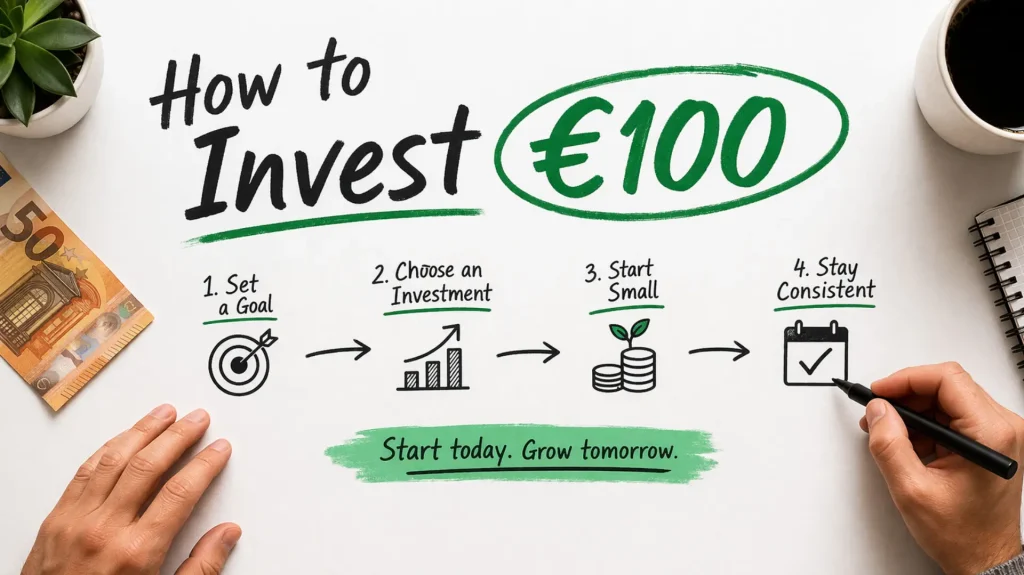
Begin with an amount you are comfortable with, even as low as €50–€100 per month, and consider using dollar-cost averaging to invest consistently.
Step 6: Monitor and Rebalance
While ETFs are generally low-maintenance, it’s important to check your portfolio periodically and rebalance if needed to match your investment goals.
Best Platforms for European ETF Investors
Investing in ETFs is easier with the right platform. Here are some top European-friendly options:
DEGIRO – Low-cost brokerage with access to European and global ETFs.
Trade Republic – Mobile-first platform, excellent for beginners, especially in Germany, France, and Spain.
eToro – Offers ETFs with social trading features, letting beginners learn from other investors.
Interactive Brokers – Advanced tools for ETFs and global market access, suitable for more serious investors.
Saxo Bank – Premium European brokerage offering a wide range of ETFs and research tools.
These platforms make investing in ETFs straightforward, allowing beginners to take control of their finances without excessive fees.
Common Mistakes Beginners Make
Even with ETFs being beginner-friendly, there are common pitfalls to watch out for:
Chasing High Returns – Beginners often pick trendy ETFs that promise high growth but come with high volatility. Diversified ETFs are safer.
Ignoring Fees – Some ETFs have hidden management fees or trading costs. Always check the Total Expense Ratio (TER).
Overtrading – Buying and selling ETFs frequently can reduce returns. ETFs are best for long-term investing.
Neglecting Research – Not all ETFs are the same. Check holdings, performance history, and risk profile.
Skipping Diversification – Investing in a single ETF is good for starters, but eventually, you should diversify across sectors, geographies, and asset types.
Avoiding these mistakes ensures smoother, stress-free investing in the long run.
Expert Tips for ETF Investing
Here are some professional tips to help European beginners maximize their ETF investments:
Start Small – Begin with a modest investment and gradually increase as you gain confidence.
Focus on Broad ETFs – Global or Europe-wide ETFs reduce the risk of poor performance in a single sector.
Use Dollar-Cost Averaging – Invest a fixed amount regularly to minimize the impact of market fluctuations.
Consider ESG ETFs – Sustainable investing is growing in Europe, offering ethical choices and potential long-term growth.
Stay Patient – ETFs are ideal for long-term growth. Avoid reacting to short-term market volatility.
Reinvest Dividends – Many ETFs pay dividends. Reinvesting them can compound your returns over time.
Learn Continuously – Read European market news and ETF research reports to make informed decisions.
FAQ About ETFs in Europe
Q1: How much money do I need to start investing in ETFs?
A: You can start with as little as €50–€100 per month, depending on your broker. Many platforms now allow fractional ETF purchases.
Q2: Are ETFs safe?
A: While no investment is completely risk-free, ETFs are considered safer than individual stocks due to diversification.
Q3: Should I invest in European ETFs or global ETFs?
A: Beginners can start with European ETFs for local market familiarity, then gradually include global ETFs for broader diversification.
Q4: What is the best ETF for beginners in Europe?
A: Broad ETFs like iShares Core MSCI Europe ETF or Vanguard FTSE All-World UCITS ETF are ideal starting points.
Q5: How long should I hold an ETF?
A: ETFs are best for long-term investing, ideally 5–10 years or more, to benefit from market growth and compounding returns.
Conclusion
ETFs are one of the best investment options for beginners in Europe. They provide an accessible, affordable, and diversified way to grow your wealth over time. By choosing the right ETF, using a reliable platform, avoiding common mistakes, and following expert tips, anyone can build a strong investment portfolio even with limited experience.
Starting small and staying consistent is key. Remember, investing is a marathon, not a sprint. With patience, knowledge, and smart choices, European beginners can harness the power of ETFs to achieve their financial goals and secure a prosperous future.